






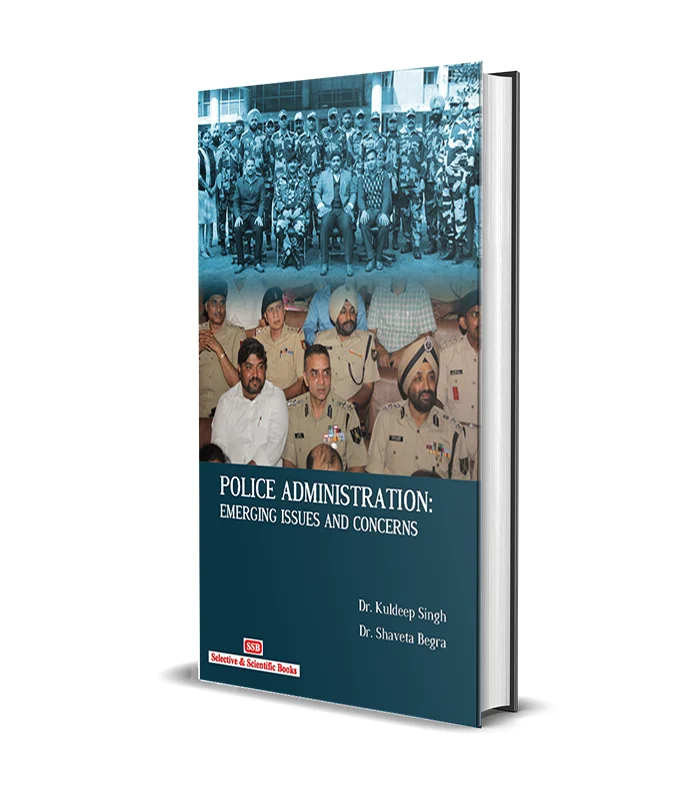
Police has been the most indispensable civil agency of the government. Society, since time immemorial, has witnessed deviance of human behaviour from the prescribed norms, rules and regulations. This deviant behaviour called for establishing a formal organization that regulates socially defying acts and behaviours. Societies, in diverse cultural background, have devised varying systems, methods and techniques to maintain public peace and coherence. Historically, numerous sporadic attempts for establishing an organized police system had been witnessed. Nevertheless, a more systematic approach to establish police, as a law enforcement agency, heralded only in the beginning of the 19th century. Sir Robert Peel who is known as the “father of modern policing” introduced police reforms in 1829 in London. These reforms had transformed the home-grown policing system into a professional policing system to overcome the problems of industrialization, crowded cities and rising crime rate. He strongly believed in adopting a strategy of “preventive policing” rather than “reactive police” and established the London Metropolitan Police Force. This, therefore, laid the foundation of modern day’s police administration.
In India, the establishment of police administration has been a British legacy. The existing system of Police Administration has been based on the Police Act, 1861. The 1861 Act defines both the structural and operational aspects of the Indian police. Besides, the Indian Penal Code 1862, The Criminal Procedure Code 1973 and the Indian Evidence Act, 1872 also governs the administration of police. After independence, the subject of “police” and “public order” has been included in the State List under the Seventh Schedule. Numerous commissions and committees have been constituted from time to time to revamp the system of police administration. Nevertheless, the seven major directives issued by the Supreme Court in its landmark judgment in 2006 in Prakash Singh case have catalyzed the introduction of the structural and functional reforms in police administration. Consequently, many states have amended their state police acts so as to rejuvenate their existing system of police administration. The new police legislations aim at defining new ways and methods for police administration so as to cope with changing patterns and trends of crime in the country.
Furthermore, the advancements in information & communication technology, changing urban morphology and rapid social & economic development have brought significant changes in nature and scope of police administration. The consequent expansion of the substantive concerns of police administration has led to the emergence of various novel issues and concerns. The theoretical concerns of police administration, therefore, aim at transforming police into a “social agency” rather than just being a “law enforcement agency”. Hence, functions and role police has been based on the tenets of “democratic policing” where police is considered as an integral part of the civil society; at the same time the cohesive co-existence of both police and citizens is vital for establishing an effective police administration. Police administration, as a discipline, is concerned with holistic development of police in the country.









Reviews
Clear filtersThere are no reviews yet.